Most players skip the demo and regret it — here's what free play actually shows you
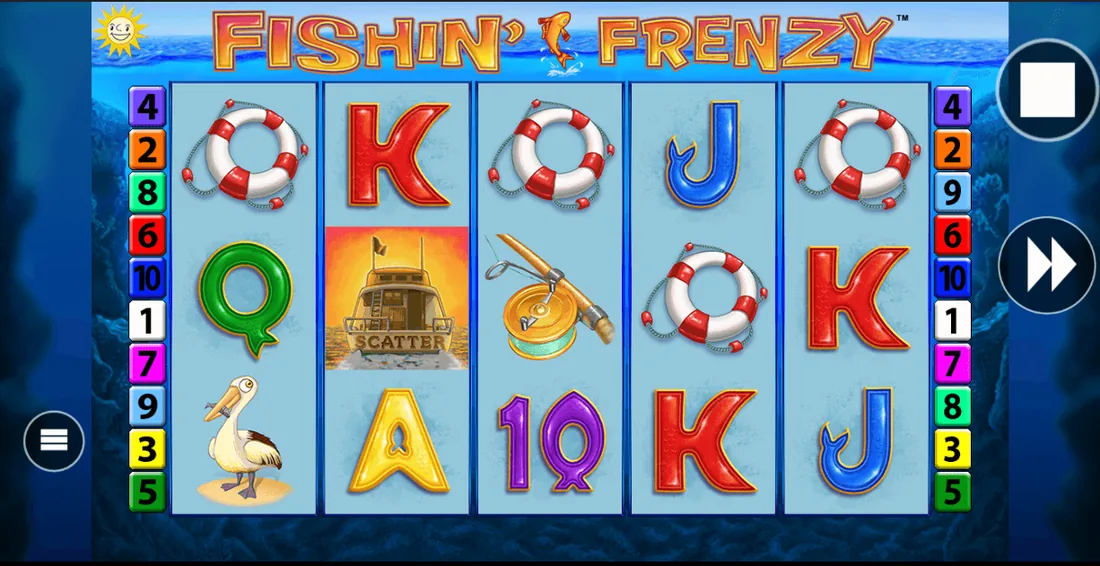
The mistake: jumping straight to real money because the demo «feels fake». Then discovering, fifty quid down, that the free spins trigger every seventy spins on average and the fisherman can land without a single fish on screen. All of that shows up in demo play — you just have to know what you're looking at.
Fishin Frenzy demo runs the same Blueprint Gaming engine, the same 96.12% RTP, the same medium volatility. Virtual credits replace real pounds, but the maths, the bonus frequency, and the dead-spin stretches are identical. Here's what a demo session actually tells you, what it hides, and how to move to real money without handing over more than you planned.
Where the demo runs and what you need to access it
Under UKGC rules brought in a few years back, every operator must verify your age before you can spin even a demo slot. That means logging in, confirming you're over 18, and passing a quick check against credit-reference data. Some sites let you register and play the demo without depositing; others gate free play behind a funded account. Both approaches are legal — the Commission cares that no under-18 can reach gambling content, not whether the demo sits in front of or behind the cashier.
You'll find Fishin Frenzy demo on most UKGC-licensed casino sites that carry Blueprint Gaming's catalogue. Look for the operator's licence number in the footer and cross-check it in the UKGC public register; unlicensed sites are illegal to advertise in the UK, and any winnings from them carry no legal protection. The demo itself loads in your browser — no download, no app install, no separate APK. Mobile works the same way: log in, open the game lobby, tap the demo button if one's shown, and the slot scales to your screen.
What a demo session looks like — and what the numbers mean
You're handed a virtual balance, usually a few hundred or a few thousand credits, and the bet panel shows the same range you'd see in real-money mode: £0.10 to £5.00 per spin, the maximum stake allowed under UKGC rules for players 18 and over. (If you're 18 to 24, the cap drops to £2.00 when you switch to real money, but the demo doesn't enforce that — it just mirrors the adult limit.) Ten fixed paylines, a 5×3 grid, and autospin if you want to watch a hundred spins run without clicking.
The pace is the same as real play: roughly three seconds a spin if you're tapping manually, faster on autospin. You'll see the boat scatter land one or two at a time for long stretches, then three boats trigger ten free spins. Inside the bonus, the fisherman wild appears — sometimes on every spin, sometimes not at all — and collects any fish symbols showing a cash value. That collection mechanic is the entire game: base-game wins are small, and everything tilts toward those free-spin fish hauls.
Medium volatility means you'll see a mix: regular small pays in the base game, then longer dry spells punctuated by a bonus round that might return ten times your triggering bet or might return nothing if the fisherman lands on empty reels. The demo won't smooth that out or rig a big win to tempt you — it's the same RNG, the same hit frequency, the same chance of walking into a seventy-spin drought before the feature lands.
Which numbers carry over to real money and which vanish
Everything about the game's structure carries over: the 96.12% RTP, the medium volatility, the ten-payline layout, the free-spins frequency, the fisherman's collection behaviour. If the demo takes an average of seventy spins to trigger the bonus, real money will do the same over a long enough sample. If you see the fisherman land three times in a bonus round without collecting more than £2.00 worth of fish, that will happen in real play too. The maths doesn't change when you switch from virtual credits to pounds.
What vanishes: your virtual balance, obviously, and any sense that a losing streak will reverse itself because you're «due» a win. The RNG has no memory. A hundred dead spins in demo play tells you that a hundred dead spins in real play is possible — it doesn't mean the next session will compensate. The demo also hides three things that only appear when real money is involved: withdrawal times, KYC checks, and bonus wagering requirements.
- Withdrawal speed: e-wallets might clear in a few hours, but Faster Payments to your bank can take up to two working days, and your first withdrawal will be the slowest because the operator has to verify your documents. Budget 24 to 48 hours for that initial check.
- KYC: proof of identity and address before you can withdraw. The documents go to a compliance team, not a robot, so there's a manual review step. If your bank statement shows a different address to the one you registered, expect questions.
- Bonus wagering: if you take a welcome offer, the free spins or bonus credit will carry a multiplier — often ×35 or ×40 — that you must turn over before you can withdraw. A £10 bonus at ×35 means £350 of total bets, win or lose, before the cash is yours. The demo doesn't model this at all.
What the demo hides — and why that matters once you deposit
The demo gives you unlimited credits and no consequences. Run the balance to zero and it resets; chase a bonus for two hundred spins and there's no rent money on the line. Real play introduces friction the demo can't show: affordability checks kick in from £150 net deposits a month, using credit-reference data at the first stage and deeper financial proof if you deposit more. If you're betting £5.00 a spin, thirty spins costs you £150, and that threshold arrives faster than most players expect.
The demo also won't tell you that credit cards have been banned for gambling since 2020, so you'll fund the account with a debit card, PayPal, Apple Pay, Open Banking, or paysafecard — and every payment method must be in your own name. If you're used to topping up a mobile-game account with someone else's card, that won't fly here. The operator will spot it during KYC and freeze your account until you prove the source of funds.
Finally, the demo runs at the default 96.12% RTP. Some operators are supplied lower settings by Blueprint — 94% or 92% versions exist — and the game won't announce which one you're playing. Check the operator's RTP disclosure page, usually linked in the footer. If Fishin Frenzy is listed at anything below 96.12%, you're getting a worse return than the demo implied, and there's no legal obligation for the site to flag that inside the game lobby.
Demo on a phone — does it work the same way?
Yes. Log in through your mobile browser, navigate to Fishin Frenzy in the slots lobby, and tap the demo or play-for-fun button if the operator shows one. The game scales to portrait or landscape and the touch controls replace mouse clicks — spin button at the bottom right, bet adjustment in the menu. The RTP, volatility, and bonus frequency are unchanged; Blueprint built the slot in HTML5, so the same build runs on desktop, tablet, and phone without a native app.
The Google Play Store and the App Store both allow real-money gambling apps from UKGC-licensed operators, but most UK casino sites don't bother publishing one — they optimise the website for mobile instead and save the app-store approval overhead. If the operator does offer an app, the demo will be inside it, gated by the same age-verification step as the website. You won't find a separate demo-only app for Fishin Frenzy; Blueprint doesn't distribute the game that way.
One practical limit: if you're testing the demo on a phone over mobile data, a long session will eat through a few dozen megabytes. The game streams graphics and sound from the provider's server, so it's heavier than a static webpage. Switch to Wi-Fi if you're planning to run a few hundred spins to watch the bonus frequency, and keep the screen-sleep setting disabled or you'll lose your place mid-session.
The lowest-risk way to switch from demo to real money
Set a deposit limit before you fund the account. Every UKGC-licensed operator must offer daily, weekly, and monthly caps, and you can configure them during registration or in your account settings. If you're testing the water, start at £20 or £30 for the month — enough for a few real-money sessions at £0.10 or £0.20 a spin, but not enough to chase losses into dangerous territory. The limit takes effect immediately for increases and after a 24-hour cooling-off period for decreases, so you can't lift it in the heat of a losing streak.
Ignore the welcome bonus if you're genuinely testing the game. A 100% match or fifty free spins sounds generous, but the wagering requirement — often ×35 or ×40 — turns the bonus into a long, low-odds grind before you can withdraw anything. You're better off depositing £20 of your own money, playing it at your chosen stake, and cashing out whatever's left with no strings attached. The first withdrawal will take 24 to 48 hours for document checks, but after that you'll have a clean baseline for what the game actually returns.
Track your session in £10 blocks. Deposit £20, decide in advance that you'll stop after two £10 losses or one £10 profit, and stick to it. Fishin Frenzy's medium volatility means you can easily burn through £10 in thirty spins at £0.30 each without seeing a bonus, and the temptation is to reload immediately. The demo taught you how the game behaves — now the real-money test is whether you can stop when the preset limit arrives, regardless of whether you're up or down.
| Deposit limit | Stake per spin | Approx. spins | Risk level | |
|---|---|---|---|---|
| £20/month | £0.10 | ~200 | Low — test safely | → |
| £50/month | £0.20 | ~250 | Low-medium — room to explore | → |
| £100/month | £0.50 | ~200 | Medium — risk of chasing losses | → |
| £150/month | £1.00 | ~150 | Medium-high — affordability checks start here | → |
Remember that affordability checks begin at £150 net deposits a month. The operator will pull credit-reference data at that threshold, and if you're depositing more, you'll face requests for payslips or bank statements. If you're treating this as a low-stakes trial, keep your monthly total under £100 and avoid the compliance friction entirely. And if you find yourself reloading three or four times in a single evening, that's the signal to stop — not because the game is rigged, but because the behaviour is moving from curiosity into habit.
FAQ
Do I need to register and verify my age to play the Fishin Frenzy demo?
Yes. UKGC rules require every operator to confirm you're over 18 before you can access any gambling content, including demo slots. You'll log in, pass an age check, and then the demo unlocks. Some sites let you play free without depositing; others ask you to fund the account first. Both approaches are legal — the regulator only cares that under-18s are blocked.
Is the demo RTP the same as real-money play?
The demo runs at 96.12%, Blueprint's default setting. In real-money play, some operators are supplied lower RTP versions — 94% or 92% — and the game won't tell you which one you're on. Check the operator's RTP disclosure page in the footer. If Fishin Frenzy is listed below 96.12%, you're getting a worse return than the demo suggested.
Can I play the Fishin Frenzy demo on my phone?
Yes. Log in through your mobile browser, find the game in the lobby, and tap demo or play for fun. The slot scales to your screen and the touch controls replace mouse clicks. The RTP, volatility, and bonus frequency are unchanged. Most UK operators don't publish a separate app — they optimise the website for mobile instead — but if an app exists, the demo will be inside it, gated by the same age check.
What's the safest way to switch from demo to real money?
Set a deposit limit before you fund the account — £20 or £30 for the month if you're testing. Ignore the welcome bonus; the wagering requirement locks your money into a long grind. Play at £0.10 or £0.20 a spin, decide in advance when you'll stop, and stick to it. The demo showed you how the game behaves; the real test is whether you can walk away when your preset limit arrives.
Why does my first withdrawal take so long?
The operator must verify your identity and address before releasing any funds — proof of ID, proof of address, and confirmation that the payment method is in your own name. That review is manual and typically takes 24 to 48 hours. After the first withdrawal clears, subsequent cashouts are faster: e-wallets in a few hours, Faster Payments to your bank in the same day to two working days. Credit cards are banned for gambling, so you'll withdraw to a debit card, e-wallet, or bank account.